
For secondary-school students and their teachers · Pilot
Practice that meets each student where they are.
Groundwork gives each student fresh problems at the right level and a nudge when they are stuck. Teachers see who needs them before the next lesson.
The problem
To help students practise you use worksheets, a practice website, a chatbot and a markbook, and none of them knows what each student can do.
The solution
Groundwork brings them together in one picture of each student.
Practice, hints and results share one record, so a student knows what to do next and a teacher knows who needs them.
For students
A student's day, in three steps
For teachers
A teacher's week, in three steps
Why Groundwork
Answer check
Expand 2(y + 3)6 + 2yCorrect2y + 6Correct2y + 3Not quiteAnswers are checked by what they mean.
Practice
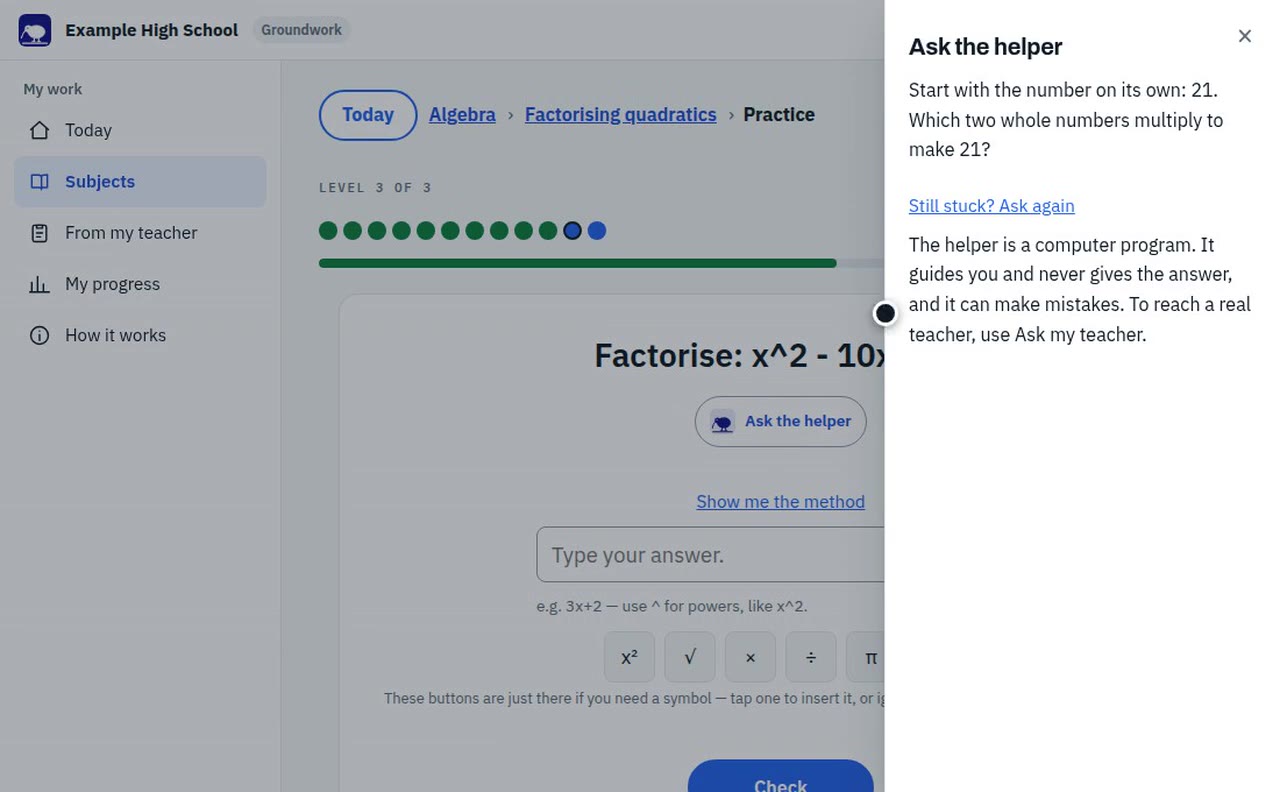
Level 1 of 3Level 2 of 3Level 3 of 3Locked inA student can keep going until it sticks.
Before your next lesson
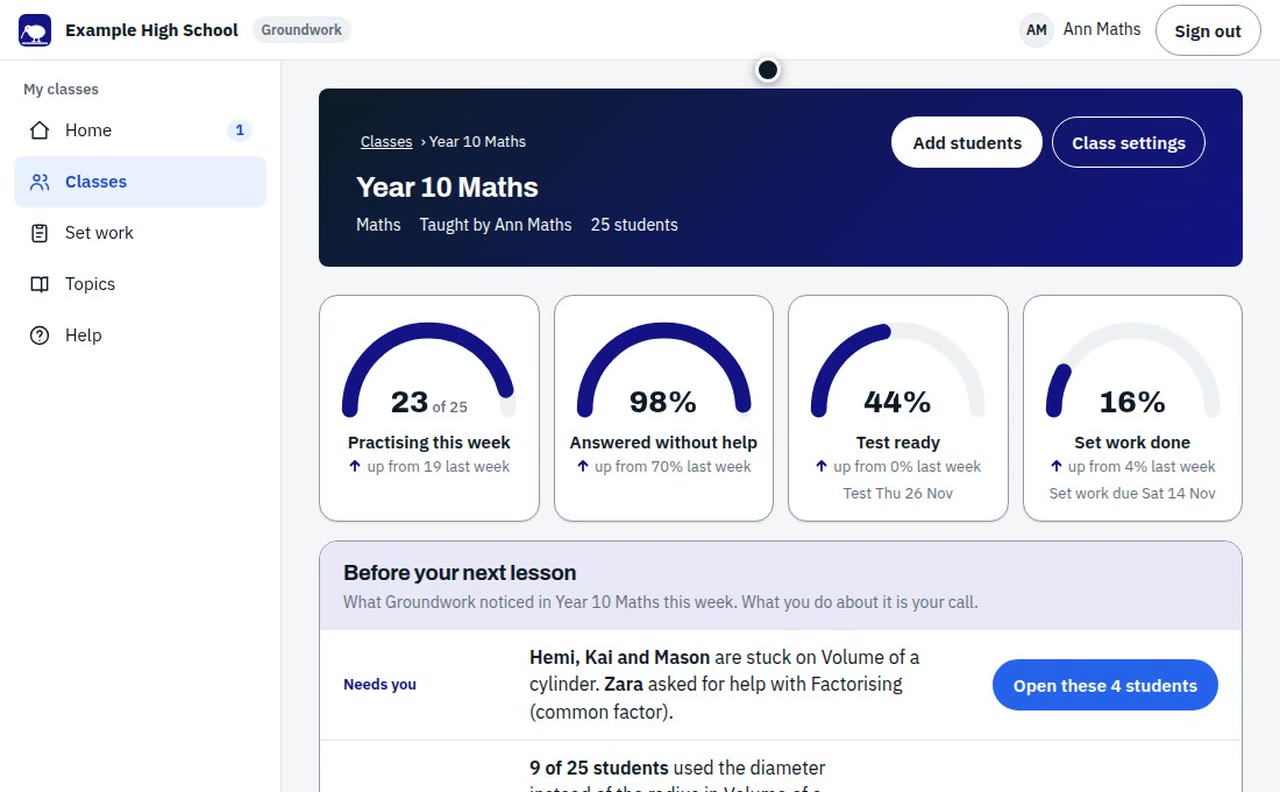
Hemi, Kai and Mason are stuck on Volume of a cylinder.Open these 3 studentsHemiKaiMasonGroundwork notices. The teacher decides.
Example scenes, made-up data.
Where it is today
Working now: for students
- 147 maths topics: algebra, number, measurement, geometry, statistics, patterns and graphs, probability and trigonometry. A class can add 20 IB preparation topics, which makes 167
- 41 science topics: genetics, cells, cell division, microbes and scientific method
- A short lesson for 200 of the 208 topics, 175 of them with an animation. Lessons ask a student to predict before they explain
- Fresh problems at three levels, without end
- Answers marked on what they mean, so 2y + 6 and 6 + 2y are both right
- “Already know this?” Three right answers lock a topic in
- A practice test paper: one fresh question for each topic of a test, easiest first, with no hints. It does not change a student's practice progress
- A helper on every page. It gives hints, and in set work and tests it never gives the answer
- No points, badges or leaderboards in practice, set work or tests. Only the teacher-run class quiz scores points, and it shows a top three at most, never a full ranking
- Students join with their school email, with no password
Working now: for teachers
- A class page with four dials and a list for before your next lesson. In the class settings you choose the New Zealand Curriculum, or the New Zealand Curriculum with IB preparation
- A Right now tab: who is working this minute, and who has three wrong in a row
- An Overview of every student and every topic, and how many are ready for each test
- Set work, and tests with a test date
- A test calendar that shows every test for your classes, and lets you set one test for several classes at once
- A class quiz: 5 or 10 multiple-choice questions, answered on each student's own device. You see who was sure but wrong, and what to start the next lesson with
- Your own practice questions, or a PDF or Word file as the source for a set. You approve every question before students see it
- A Curriculum page for Years 9 and 10: which outcomes are taught, and how many of a class have locked each in. Download it as a PDF
- Import a class list, and export class results as a spreadsheet
- Staff sign in with an emailed link, with no password
- A separate database for each school
Coming next
- A version for families at home
- Teachers reminded when a student's request for help has not been seen
Proof
Straight answers
What about children's data?
Can we trust the AI?
Does it replace the teacher?
How do we start?
More screens
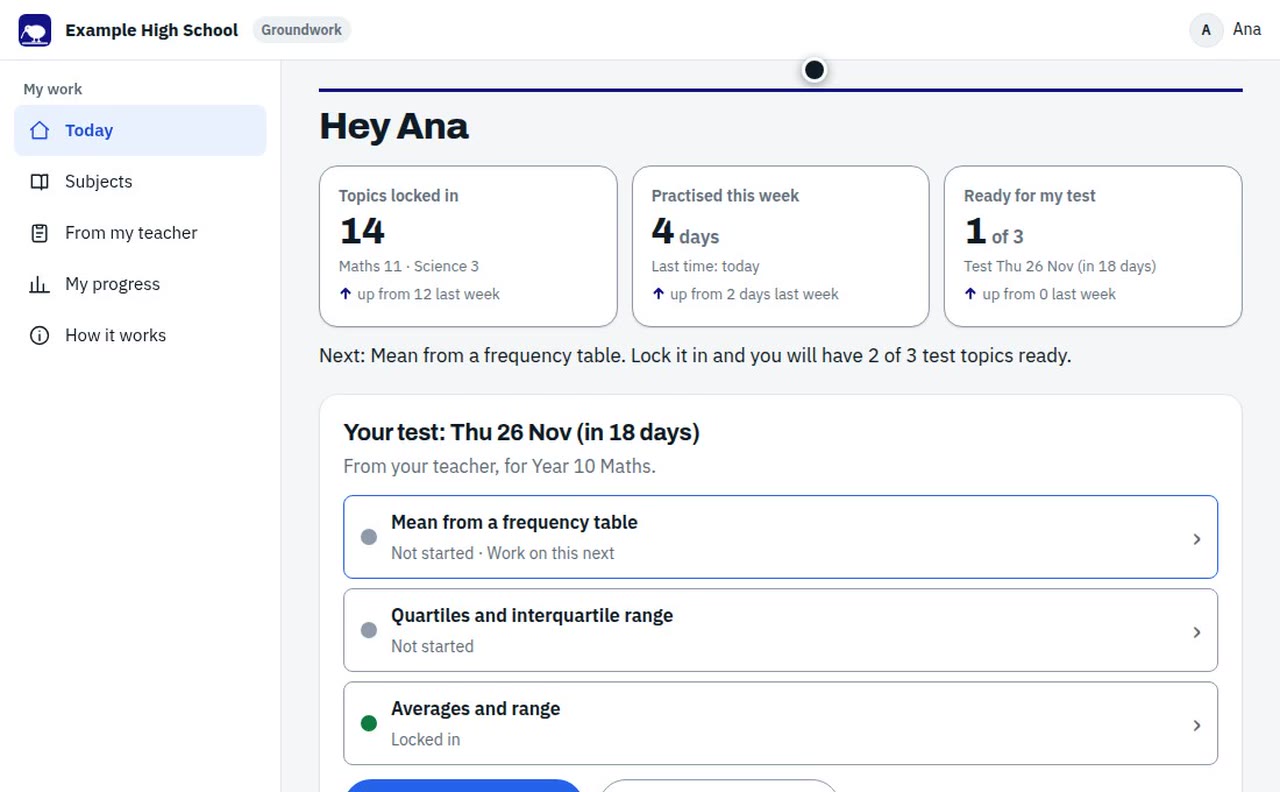
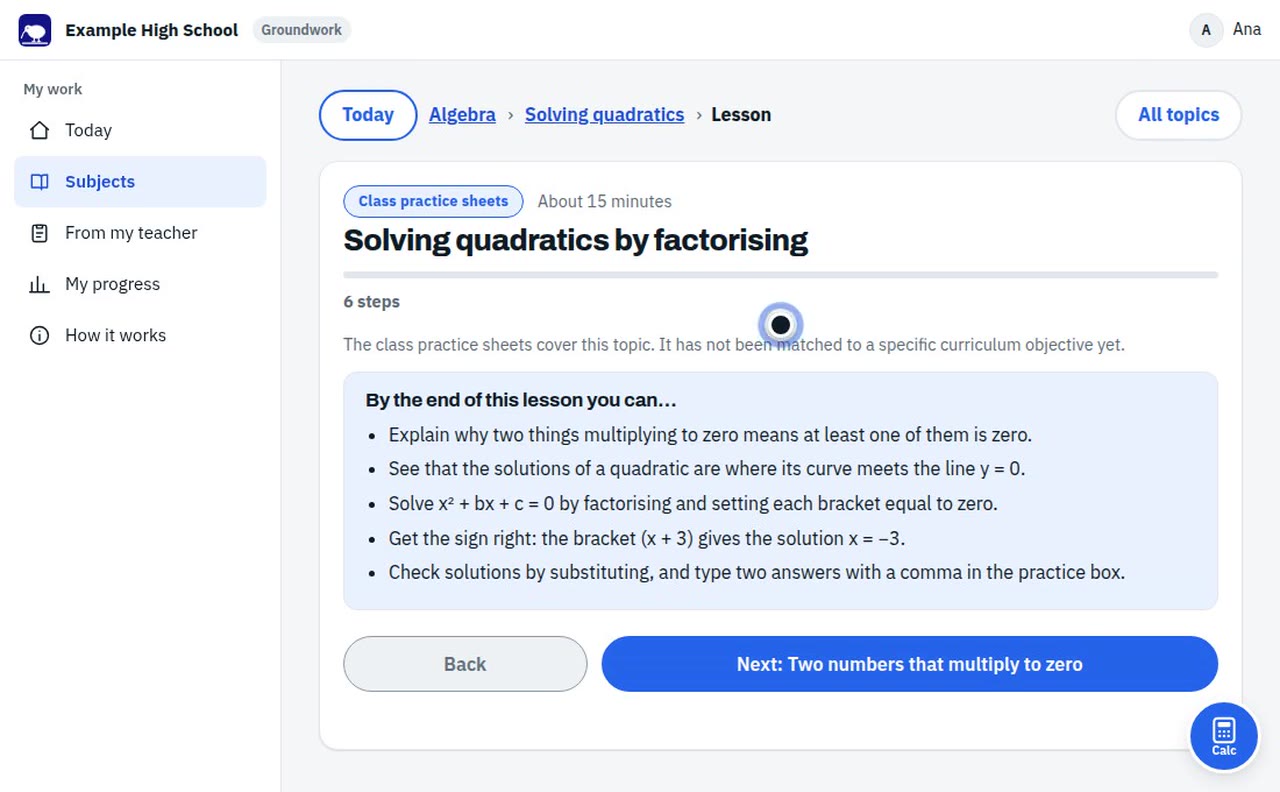
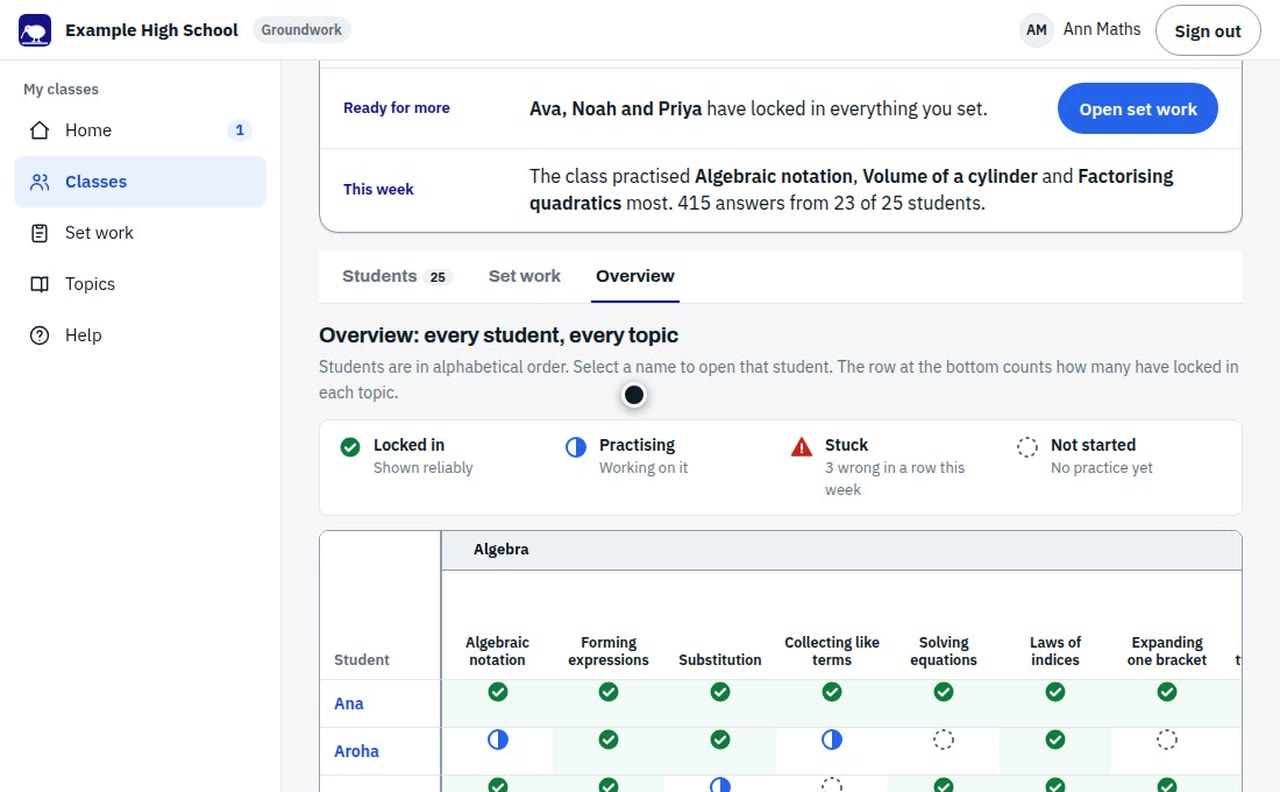
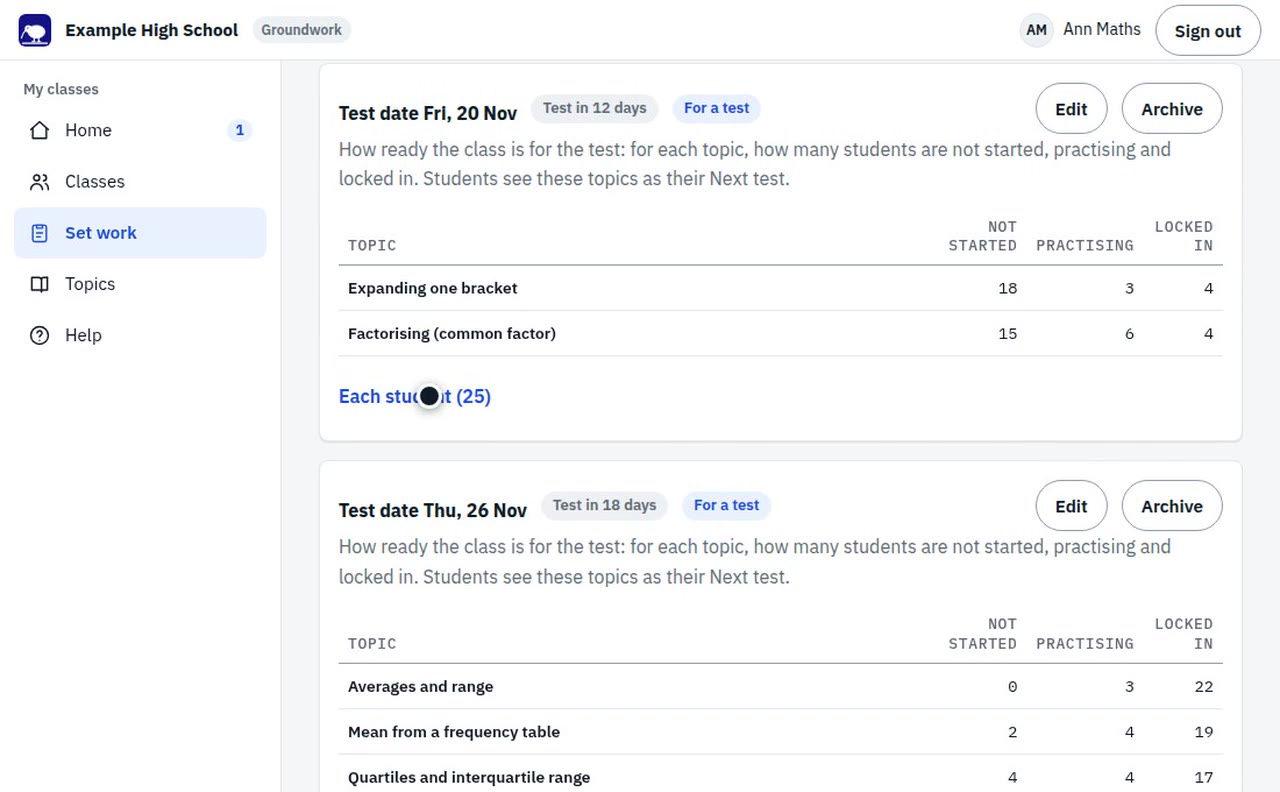
Today: what is locked in, the days practised, and the test topics.
Example screens, made-up data.Built the CruxMS way
Make steps disappear.
The aim is fewer steps.
People decide, software watches.
AI drafts and flags, and a person approves.
One real thing, one home.
Each fact is stored once, and everything else points to it.
Try it with one class.
Tell us the year level and subject and we'll talk about a pilot.